UKRAINE PULSE
News, Advice and Practical Guides for Ukrainians Abroad

In the story of Olha Barysh, who currently lives in the Netherlands developing her own business, there is something unique. Like thousands of Ukrainian women, she never dreamed of living abroad. The war destroyed her normal life. But the girl managed to transform the experience of betrayal, deception, destruction, and hopelessness into energy that ultimately became the impetus for big changes.
The war caught up with her in Zaporizhzhia, where she was studying at the medical university. The proximity to the nuclear power plant was the most frightening at that time, so she returned to her parents in a village in the Donetsk region.
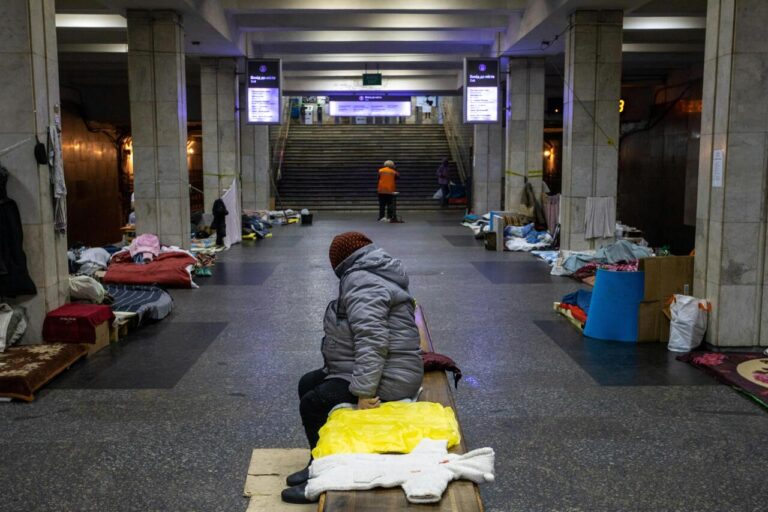
Olha stayed there with her family until early April, although nearby were Kurakhovo and Avdiivka, where deadly battles were taking place.
“We were in some kind of shock, I don’t understand why we stayed there. We thought the war would end soon. It was as if we didn’t understand that a bomb could just fall right now.”
In April, the family finally left their home. There were no intact houses nearby. Later, their house was hit by a bomb, and now there’s only a deep crater instead of their home.
The family had to separate. Olha’s parents first moved to a safer region of Ukraine. The girl began a new life in the Netherlands, where she was invited by her boyfriend. They had met in Amsterdam several years ago, after which they started a relationship, and he would fly to see her in Kyiv almost weekly.
At that time, Olha didn’t know English, so they communicated through an online translator. After her move to the Netherlands, the relationship with the boyfriend was harmonious. However, many things between them soon started to worry Olha.

Later, the boyfriend invited her to live in his apartment. But he didn’t stay with her. Olha began to piece together facts, analyze situations, and his words. It became clear: the guy was married.
A prolonged depression began. Olha’s house in Ukraine was completely destroyed. There was nowhere to return to. Disappointment in the man she trusted, lack of language skills, absence of family, work, and income.
“I lost 15 kilograms in 4 months. Eventually, I realized I wouldn’t get out of this depressed state without my family’s support, so I asked them to come stay with me for a while.”
The girl understood that she partly ended up in this situation due to not knowing English or Dutch. So, while processing her pain, she consciously decided to transform it into something useful for her own life. And Olha made the decision to learn languages in the shortest possible time.
Olha started with English. And after six months, she realized it was worth investing her last money in learning Dutch. There was huge potential for development in this niche.
“It was expensive. An hour of Dutch lessons with a teacher cost 35 euros, while I paid 10 euros for English. The difference was enormous.”
The girl had lessons three times a week with a tutor. Besides this, she attended free courses paid for by the state. Dutch grammar is very complex, it’s not identical to English or Ukrainian.
“Later, Ukrainians started asking me to explain grammar. And I explained to them, first for a cup of coffee, then for 5 euros I conducted lessons for them.”
Individual lessons with a tutor were “eating up” most of Olha’s budget. There were also initial problems with social benefits. Service workers thought Olha looked elegant and not poor, so they weren’t quick to assign financial support. The girl started looking for additional work.
“I was invited to an agency to try myself as a model. That’s how I started working part-time as a photo model.”
Becoming a foreign language teacher was never Olha’s dream. But everything happened by fate’s will. More Ukrainians sought help with language issues, and Olha’s lesson price increased to 10 euros per hour.
“There are very few Ukrainian Dutch language teachers here. It’s not a popular language. The Netherlands was closed to immigrants from Ukraine or Russia, so this sphere hadn’t developed here, which opened unique opportunities for me.”
Later, Olha was invited to collaborate with a foreign language school as a teacher.
“That’s how it started, I realized I would earn money systematically. So it was time to register as a private entrepreneur. I found a Ukrainian-speaking accountant who helped me figure this out.”
After registering as an entrepreneur, it became clear: teaching was no longer a hobby. It was time to build her own business model.
“In the Netherlands, you can earn up to 600 euros per month as a hobby, this amount isn’t taxed. But I exceeded this income.”
Without experience in entrepreneurial activity, Olha made mistakes. And she was very exhausted. She conducted 8-9 individual lessons daily. There were no days off either.

“I work, work, work. And I realize: I’m burned out. No more strength. And when I paid my first tax, I think it was 1800 euros for three months. I had done a lot of work, I didn’t leave the house. Paid bills, taxes — no money left.”
It was time to either scale or close down. Olha chose the first option. However, she didn’t know how to do it. So she purchased an online course from psychologist Natalia Kholodenko and marketer Dmytro Shevchuk about properly building a sales system.
“I’m not a systematic person, it’s difficult for me to lift myself up, motivate myself. The course had quality structure and navigation from experts. Powerful support, entrepreneur mindset system. I really liked the combination of two experts.”

Even during this training, Olha began rebuilding her own business model. She delegated some tasks to experts, like SMM, targeted advertising, brand building. Additionally, advertising purchases from local bloggers became an impetus for new business development. Finally, Olha started group lessons, which freed up her time and increased income.
“This was a niche that wasn’t filled at that time. But it’s super difficult to jump into it because you needed to learn Dutch in a very short time.”
Olha has plans to scale her business. But, in parallel, she doesn’t refuse other work. She works as a photo model and even had a role in a film.
“I like Natalia Kholodenko’s mindset. I don’t want to think about where in the supermarket to buy cheap products with my last money. And I don’t want to transmit this to Ukrainians. I want to transmit to Ukrainians that you can be wealthy people, not refugees, not second-class, even despite the war.”
For Olha, knowing the language of the country where you live is super important. You can show people that you’re intelligent. Knowledge of the language opens countless opportunities.
“They know nothing about us. And what they see in the news, unfortunately, they think we’re underdeveloped. When I start speaking Dutch with locals, the attitude changes immediately, you can feel it. Even in the modeling agency, I got more orders because I speak Dutch.”
The business became not only financial support for Olha but, primarily, psychological support. However, there’s another side to success. She often gets criticism from haters, especially from local teachers. They write that it’s unfair to have so many students, be popular, and teach without an education degree.
“This offends me from time to time, but I mostly don’t pay attention. I see financial results – it’s gratitude from people who want to pay me. And I see positive feedback from my students. And I see my students’ successes, they pass exams, and this is the first step for super new opportunities for them.”
You can support Olha and her business by following her Instagram page.
Inna YAKYMENKO