UKRAINE PULSE
News, Advice and Practical Guides for Ukrainians Abroad
Of all potential types of business in Ireland, Ukrainians are most often advised against opening a Ukrainian cuisine restaurant. The thinking goes that it’s a thankless and doomed venture. The Irish are very traditional and reserved in their preferences. Sure, they’ll try borscht once, but then they’ll go back to eating fish and chips.
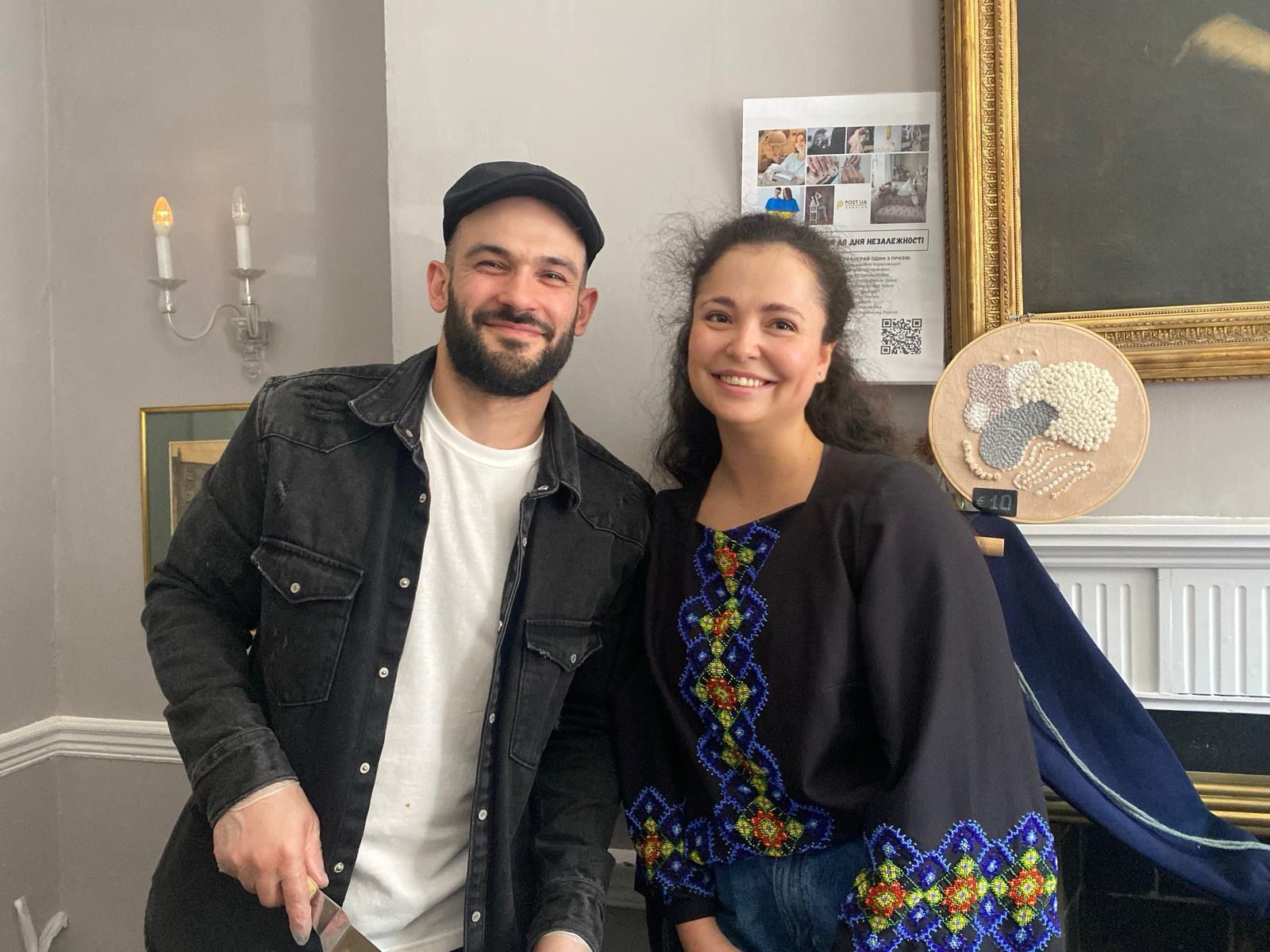
A married couple from Ukraine — Mykola and Viktoriia — broke this stereotype. The lion’s share of their regular customers at the family café Lucy are Irish.
“This stereotype doesn’t work, because the food is delicious,” explains Viktoriia, the owner. “People come back again and again because they enjoyed it, and it doesn’t matter what country’s flag flies at the restaurant.”
The honey cake prepared at Lucy has become famous far beyond Dublin. But Viktoriia reveals the secret without any mystery: the honey is the best in Ireland. She shows a video of visiting the apiary where they buy their honey. The bees, as always, work in an organized, focused manner, with passion for their craft, to put the highest quality honey on people’s tables.
Spending over 5 hours in the restaurant, I see — everything here is just like at the apiary. Everyone, from the waiters to the owners, works cohesively and passionately so that a dish appears on your table that meets both high standards of taste and high standards of Ukrainian cuisine.
When the war began, Viktoriia and Mykola were in Sri Lanka. Then they returned to Ukraine—to care for disabled relatives and volunteer. When housing prices soared higher than their salaries, and caring for relatives cost even more, the couple decided to go work abroad. They arrived in Barcelona and waited for permission to move to the USA, which was logical for people who speak English fluently. But when the decision came, for Mykola it was brief: “Not authorized.” No explanations, no reasons.
This was the first day they realized the USA wouldn’t happen. The first day of despair. But there was no time for despair, so they decided there should be a plan A and a plan B, not living on emotions alone. That’s how they, with a new plan, ended up in Dublin.
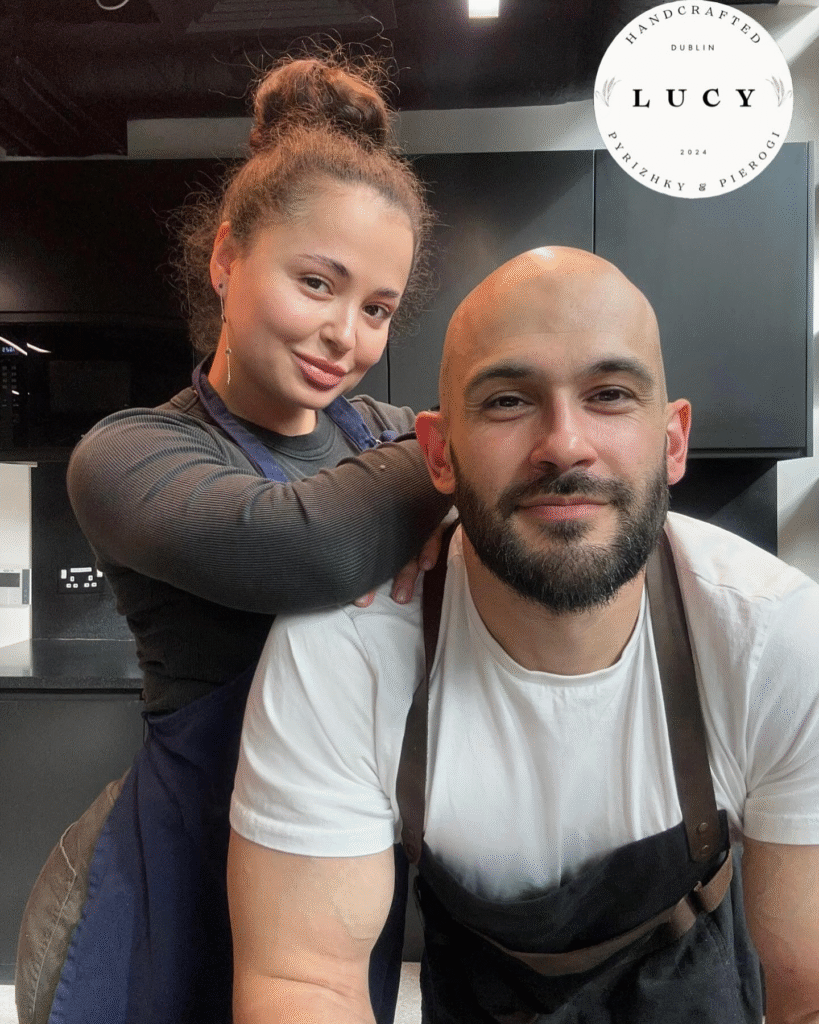
June 2023. They arrived and didn’t take state housing — they had a dog, and programs for housing with animals had already closed. They searched for housing and work themselves. The first apartment came to them by pure luck. The apartment owner was traveling and simply looking for someone to live in his place while he was away. But he was only leaving for three weeks. Considering the tense housing market situation, Viktoriia and her husband decided it was a good offer.
“It was difficult,” Viktoriia recalls. “The neighborhood was good, but the apartment was small and located in a basement. Together with the kitchen and bathroom, the space measured 3×3 meters and the window faced a wall. Even when it was still hot outside, it was very cold inside.”
Mykola went to work in a bakery. Viktoriia found work in a burger joint. In parallel, both also had online work. From the start of the war until now, they’ve moved 14 times. So the new life wasn’t easy.

When they got a contract for long-term housing — they opened a home business. They cooked dumplings and pastries, sold them through Deliveroo. Customers came through the app — first Ukrainians, then more and more Irish.
Next, Viktoriia and her husband decided to sell at the market on Sundays. But getting in there is not easy at all. One day, in desperation, they cooked up dumplings and just went to the market hoping to meet anyone who could help them get a spot for trading. This absolutely adventurous plan bore fruit. They met people who shared contacts of other people, and so, step by step, through luck and persistence, they got permission to trade.
During the day they worked their main jobs, in the evening they made dumplings and pastries, at night they deep-cleaned the kitchen, on Sundays—trading at the market, and then delivery… They delivered food to customers themselves by scooter or bicycle. Viktoriia recalls dozens of stories when a bag would tear and borscht would spill, or there would be hail, or the scooter would run out of battery halfway through a downpour…
Their dishes and ideas for new dishes lacked space in their home kitchen. So Mykola started looking for premises. There were many empty premises, but all with bare walls — no equipment or utilities. The minimum investment in an empty space started at 150-200 thousand euros.
The couple didn’t have that kind of money, so they looked for a building where a kitchen had operated before. And when they found one, there was another “surprise”: “key money” — a sum for what had already been done there previously, meaning compensation to previous tenants. In Lucy’s case, it was an incredible sum — almost half of all the money they had.
“I started crying,” Viktoriia admits. “Because we didn’t know you had to pay for what was already there.”
They found the premises in December. The answer came in January. But the electricity in the premises was completely cut off — the landlord was saving money that way. Until May 25, they couldn’t even connect the electricity.
“The landlord’s agent really messed me around for a long time,” Viktoriia recounts. “He said he’d do everything in two weeks, but then there were holidays, St. Patrick’s Day, something else. So I had to figure out myself which agencies, licenses, papers, and explain everything to the owner.”
When they could finally start renovations, money was scarce. They did most of the work in the premises themselves.
“We got to the point where we had ten euros on our cards,” Viktoriia says. “My parents helped me, my sister helped add to our finances.”
There were moments when Viktoriia felt despair and doubted whether they did the right thing opening their own business. But it was too late for regrets. Because to start their own business they had sold their apartment and car in Ukraine, so there was no going back.
Even before the renovations were finished, they ran out of money. They had nothing to offer guests except coffee and desserts. But they had an Instagram page, the ability to cook deliciously, and the desire to work.
On June 26, they officially opened. At first it was a café: coffee, desserts, dumplings and pastries. Viktoriia learned to professionally create content for Instagram and regularly posted videos there.
“And then blogger after blogger started coming,” Viktoriia says. “Irish Times helped us. Irish Independent helped. They came to us themselves, saw us on the Internet. Even Lovin Dublin, which has 500 thousand followers, came to us themselves.”
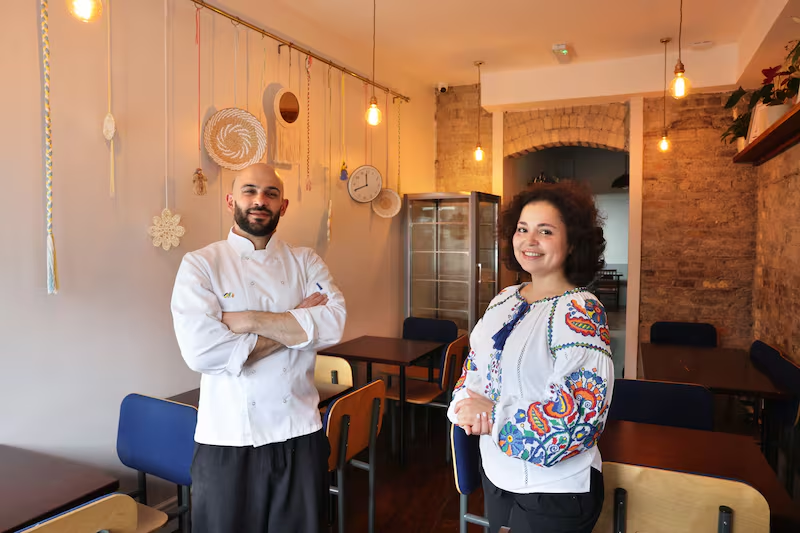
Photo: The Irish Times
Now about fifteen people work at the café. Viktoriia positions it as a family café.
“I think we’re just a good café. I want people to feel free, like in a little café, without extra formalities.”
On Tuesdays they hold master classes. People buy tickets for 60 euros. The price includes an art class, materials, drinks, hot dishes and dessert.
“In the restaurant business there’s no concept of ‘everything’s fine,'” Viktoriia says. “Today everything’s fine for you, and tomorrow everything’s bad if you don’t do anything.”
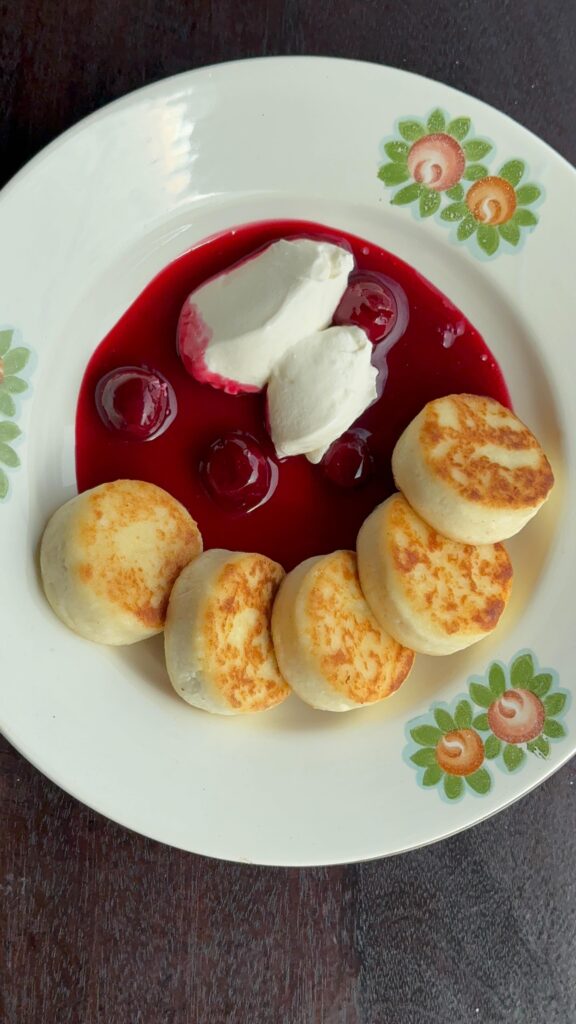
Three grandmothers regularly come to work at the café — Ukrainian women. They prepare cabbage rolls, syrnyky and dumplings. The cabbage rolls sell quickly — often they don’t even have time to freeze.
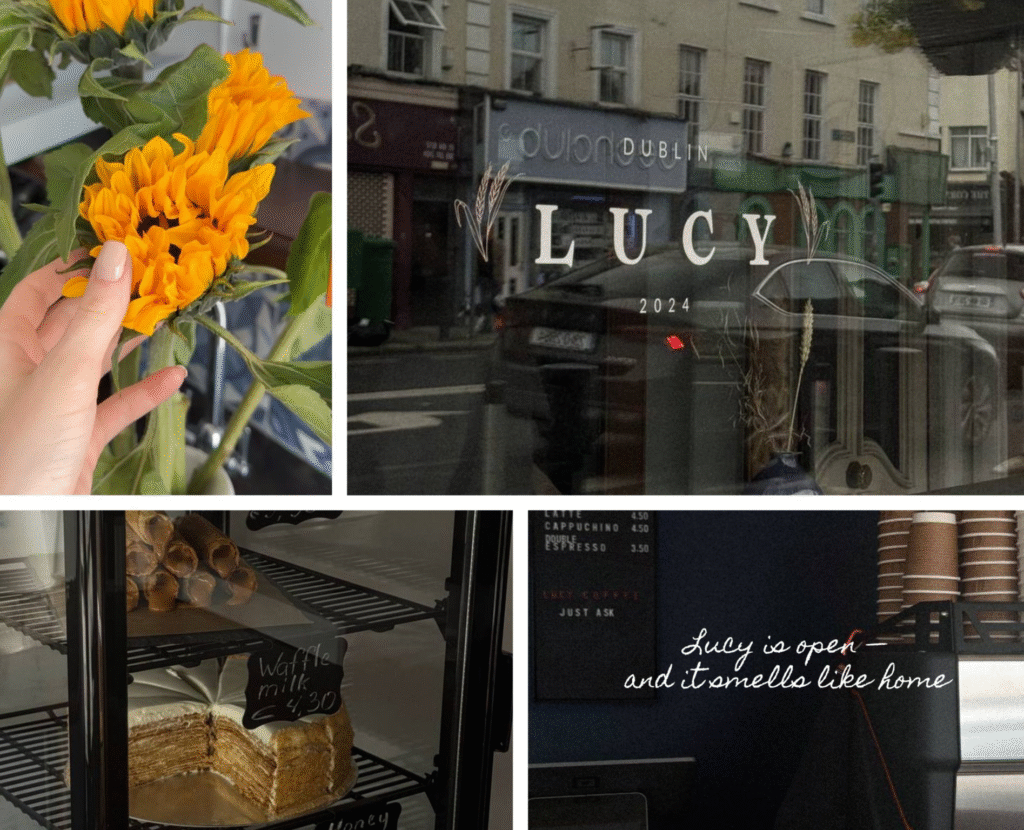
It’s like home, only in the center of Dublin.
In the center of Dublin there’s now a place that smells of Ukrainian borscht, where they make real honey cake, where the Irish eat dumplings and ask for more. Where people who fled from war and lost everything were able to create something of their own.
This is not a tourist establishment. This is a piece of home on the other side of the planet. And people always return home.
P.S. The café is named after Mykola’s grandmother — Lucy. She passed away on December 5, 2022, two months before the start of the full-scale war. Naming the café in her honor was a way to honor her memory and the contribution to Mykola’s life that she made. The thing is, it was Grandma Lucy who cared for him when he lost his parents. She instilled in him a love of the kitchen and cooking, which later became his profession. Therefore “Lucy” is about family values, respect, and memory.